










International track : Indian French Master in Computational Biology (IFMCB)

  • Science and Technology
International track : Indian French Master in Computational Biology (IFMCB)
Diplôme national de master contrôlé par l'État

Call to actions

In the aim that we contact you back

This field is optionnal. If you do not fill it, the sample above question will be send.

enter the word in the caption

Sending the message...

Message sent.

An unexpected error occured during the processing of your request. Could you please try reaching us by phone ?

Résumé

The international program “Indian French Master in Computational Biology” (IFMCB) is a dual French-Indian degree. The first year of the master's program is completed in France and the second year in India at IIITD – New Delhi. Read more

Objectifs

Initial training / Executive Education Program / Accessible for resumption of studies /
Master
Unknown label
École Universitaire de Recherche Sciences du Vivant et de la Santé
English

Details

Introduction

The International Track: Indian French Master in Computational Biology (IFMCB) aims to train students from various backgrounds (biologists, computer scientists, physicists, mathematicians) who are attracted to multidisciplinary quantitative approaches to 21st-century biology and medicine.

It is an international and multidisciplinary program leading to a dual French-Indian degree.

  • The first year of the master's degree is completed in France.
  • The Master 2 program is completed in India, at IIITD – New Dehli, an internationally renowned institute of technological excellence.

This program provides a real passport to a professional career abroad.

The acceleration of biotechnologies producing high-throughput omic data, the enrichment of large biomolecular databases, and the development of imaging techniques constantly reveal the great complexity of biological processes.

The program offers students the opportunity to acquire the fundamental knowledge and skills in bioinformatics and/or computational biology that will enable them to become key players in contemporary fields of biology. The two long-term internships provide significant experience in an international professional research environment.

The combination of options and long international internships allows each student to personalize their graduation profile around a common interdisciplinary foundation, both in terms of biological topics (genetics, ecology, neuroscience, medicine, etc.) and data modeling and analysis methods (artificial intelligence).


Training timing and duration

Dates for the 2025-2027 cohort:

  • Master 1: September 1, 2025 to June 30, 2026
  • Master 2: August 15, 2026 to May 30, 2026

In both M1 and M2, classes are held in the fall, with the spring devoted to a long internship in a laboratory or on a platform. In M2, classes begin in India at the end of August and continue until May.

During the two years of your master's program, you will be required to complete 550 hours of lectures/tutorials/practical work and a maximum of 1,500 hours of compulsory internships, broken down as follows:

  • M1: 5-month internship, starting in February 2026
  • M2: 1-year internship, starting in January 2026


Objectives

To understand the complexity of multiple cellular and molecular functions, as well as their roles in physiological processes or diseases, acquiring massive amounts of data is not enough: it must be analyzed and interpreted using formal methods derived from mathematics, computer science, and physics approaches.

This is the challenge addressed by the International Track: Indian French Master in Computational Biology (IFMCB), which enables students to acquire skills based on a common international foundation (acquisition and processing of biological and omic data, imaging), and then specialize through a range of options in fields related to bioinformatics (statistical analysis, artificial intelligence, programming, databases) and computational biology (systems biology, biophysics, mathematical modeling) in order to meet the current and future challenges of research and development in these fields.

This program allows students to immerse themselves in an international Indian technology hub and discover the various issues and challenges on a global scale.

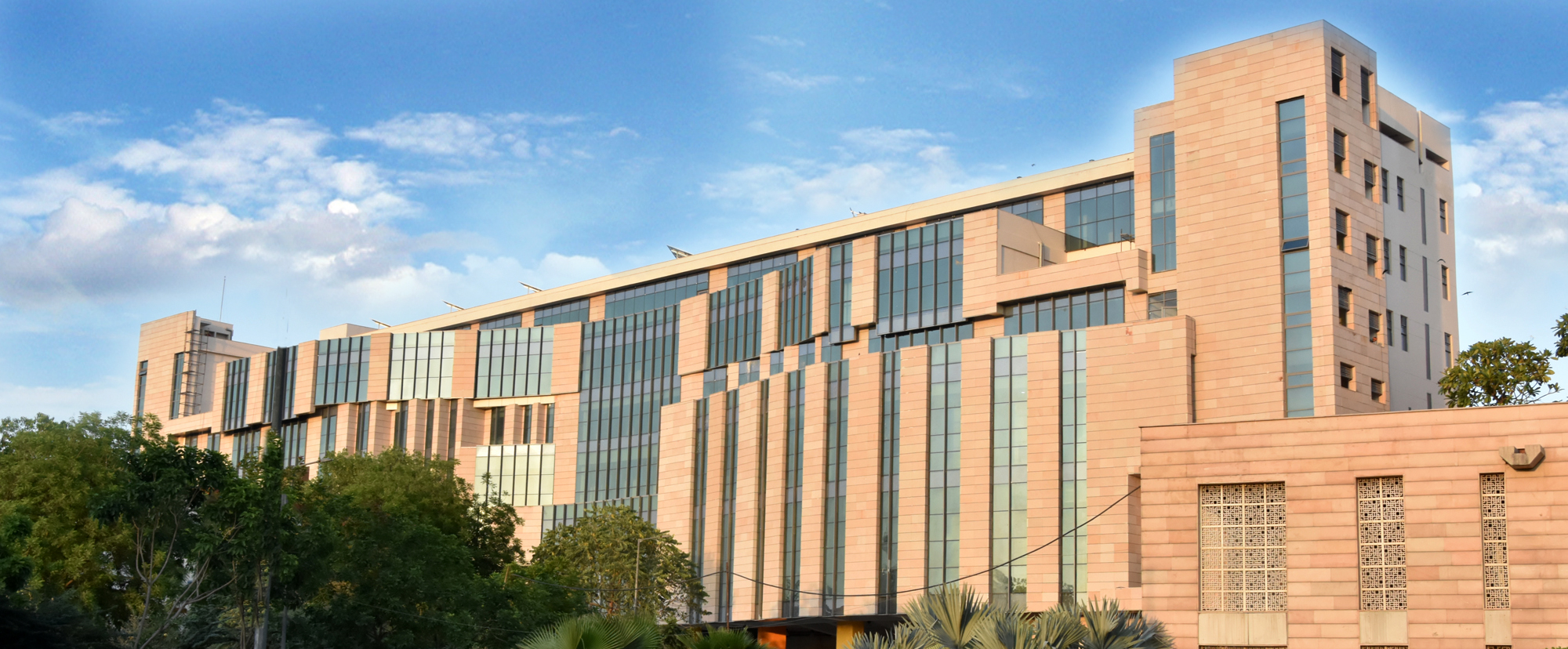
Teaching Location


Program Highlights

Le parcours International track: Indian French Master in Computational Biology (IFMCB) se distingue par :

  • International and multidisciplinary dual degree program offered to biology students and those with a background in basic sciences.
  • A 5-month internship in M1 in research laboratories or BioTech/MedTech industries in France, followed by a one-year immersion in M2 in research laboratories or BioTech/MedTech industries in India (New Delhi).
  • Excellent training in omic technologies, biological imaging, artificial intelligence, and mathematical modeling of biological processes.
  • Practical workshops supervised by engineers and professionals in the field.
  • Dual degree: Master of Life Sciences (France), M.Tech Computational Biology (India)

Success and satisfaction rates

Satisfaction rate : Data on success and satisfaction rates for the entire two years of the Master's in Life Sciences. Please contact the program directors for more details.

Success rate: For the different tracks of the Master's in Life Sciences, the success rates are:

 
Track Success rate year 2024-2025

Number of graduates / Number of enrolled students

Parcours Cancérologie et Recherche Translationnelle (CRT) 91% 10/11
Parcours - Bio-informatique et Biologie Computationnelle (BBC) 92% 11/12
Parcours - Génétique et Développement (GD) 83% 10/12
Parcours - Physiopathologie et Approches THérapeutiques émergentes (PATH) 100% 11/11
Parcours - International track : Indian French Master in Computational Biology (IFMCB)

N/A (first cohort currently underway)

- / 1
Parcours - International ERASMUS track - From Membrane Biology to Neuroscience and Experimental Medicine (MemBioMed)

N/A (first cohort currently underway)

N/A / 17
Parcours - International ERASMUS track - Biomedical and Computational Sciences in Ageing (imAGEin)

N/A (first cohort currently underway)

N/A / 21
 

Open and adapted to students with disabilities
Learn more on the "Mission Handicap" website


Le Campus Valrose ajuste au mieux son organisation pour accueillir les personne en situation de handicap.

This training is eligible to a MON COMPTE FORMATION funding
moncompteformation.gouv.fr


Partnership

The Indian French Master in Computational Biology (IFMCB) program is a partnership between Université Côte d'Azur and Indraprastha Institute of Information Technology Delhi, an internationally renowned institute of technological excellence.

Admission

Prerequisite

Graduate level

To be admitted to the IFMCB program, applicants must:

  • Either have a solid background in biology, at least equivalent to a bachelor's degree
  • Or hold a multidisciplinary double bachelor's degree in mathematics and life sciences or a bachelor's    degree in mathematics or physics, or be a graduate of an engineering school, while also having sufficient   knowledge of molecular, cellular, and genetic biology
  • Have a minimum level of English of B2

The IFMCB program is intended for students interested in bioinformatics or computational biology who have completed at least three years of higher education in science, as well as students wishing to study abroad.


Conditions of applications

The application file must include the following items:
A CV
A cover letter
Transcripts from your most recent degree (and any previous courses of interest)
A letter of recommendation is optional but accepted for students who are not from Université Côte d'Azur (for the latter, a letter of recommendation is not required)

Applying for M1
Applications for M1 must be submitted online between February 17 and March 16, 2026, at the latest, on the government platform MonMaster.

Applying for M2
Admission to M2 is by application on the e-candidatplatform, usually from April to May (datzes 
Admission to M2 can also be obtained via VAE (validation of acquired experience).

MORE INFORMATION

Program

In addition to compulsory courses, students refine their training according to their scientific interests.

In M1, compulsory courses are divided into three core units and, for each track, two units to be chosen from a specific list.

In M2, three units are also compulsory, and the two options can be chosen from among all the Master's units.

Depending on the track, the options cover different biological topics, statistics, databases, systems biology, or approaches from physics.

Master 1 - Université Côte d'Azur, France
Semestre 1
Semestre 2

Stage en Laboratoire de Recherche de 5 mois

Master 2 - For Université Côte d'Azur students in IIITD, India

IIITD Program Structure 

Monsoon Semester

Core Courses Mandatory Computational Biology Electives Computer Science Electives
  • Foundations of Modern Biology Cell Biology and Biochemistry  
  • Programing for computational biologists 
  • Machine Learning for Biomedical Applications
  • Computational Gastronomy
  • Computing for Medicine
  • Biophysics 
  • Cheminformatics 
  • Metagenomics 
  • Biomedical Image Processing  
  • Data Mining 
  • Modern Algorithm Design  
  • ComputerGraphics
  • Image Analysis/ Digital Image Processing
  • Advanced PRML 

Winter Semester

Core Courses Mandatory Computational Biology Electives Computer Science Electives
  • Introduction to Mathematical Biology
  • Algorithms in Computational Biology  
  • Scientific Communication
  • Introduction to comp Neuroscience
  • Big data Mining in Healthcare
  • Computer Aided Drug design 
  • Data Science in Genomics
  • Biostatistics
  • Computational Methods in Oncology  Research
  • Microbiome Data Science  
  • Statistical Computation
  • Machine Learning
  • GPU Computing
  • Probabilistic Graph Models
  • Big Data Analytics   Foundations of Parallel Programming  


En savoir + sur le programme Tech computational biology de IIITD

Master 2 - For IIITD students at Université Côte d’Azur
 
SEMESTER 1

3 mandatory courses:

  • UE05 Biological Data in Practice 2
    • ECUE 05-1 Computational biology of omics data 
    • ECUE 05-2 Massive data analysis 2
  • UE10 Modeling of biological systems
    • ECUE 10-1 Large network modeling
    • ECUE 10-2 Modeling molecular
  • UE28 Structural Biochemistry for bioinformaticians
    • ECUE 28-1 Basis of structural biochemistry and bioinformatics web tools
    • ECUE 28-2 Structural biochemistry for Applied Bioinformatics

2 optional courses to choose from the following:

  • UE45 Biophysics
    • ECUE 45-1 Biomechanical properties of the cell
    • ECUE 45-2 Physics technics for biology
  • UE46 Mathematical tools for systems biology
    • ECUE 46-1 Dynamical models for biological networks
    • ECUE 46-2 Formal methods for boolean networks
  • UE Stochastic models in neurocognition and their statistical inference
  • UE Multiple Timescale Dynamics in Neuroscience
  • UE Functional neuroimaging and data processing
  • UE Mathematical modeling at the molecular and cellular level
  • UE Text analysis, deep learning and statistics
  • UE Knowledge, intelligence and expertise
  • UE Reasoning and decision-making
  • UE Language
  • UE Advanced deep larning 

Additional course:

UE Winter School- Conférences
SEMESTER 2

UE PPR : Internship (6 months)
- ECUE Presentation of internship project
- ECUE Experimental results presentation
- ECUE Master thesis
- ECUE Supervisor's evaluation
- ECUE Tutored project for scientific preparation of laboratory internship


Consulter les syllabus des UE dispensées à Université Côte d'Azur :

The program includes two long internships. A five-month internship in the first year of the master's program in research laboratories or biotech/medtech companies in France, followed by a one-year immersion in the second year of the master's program in research laboratories or biotech/medtech companies in India (New Delhi).

The IFMCB program includes a mandatory study abroad period in India:

  1. The first year of the master's degree is completed in France.
  2. The second year of the master's degree is completed in India at IIITD – New Delhi, an internationally renowned institute of technological excellence.

Full time

Dates et durée de la formation

Dates pour la promotion 2025-2027:

  • Master 1 : du 01/09/25 au 30/06/26
  • Master 2 : du 15/08/26 au 30/05/26

En M1 comme en M2, les enseignements ont lieu à l'automne, le printemps étant consacré à un stage long en laboratoire ou sur une plate-forme. En M2, les enseignements commencent en Inde à la fin du mois d'août et se poursuivent jusqu'en mai.

Durant les 2 ans de votre parcours de master, vous aurez à suivre 550h de cours/TD/TP et 1500h max de stage obligatoires suivant le découpage suivant: 

  • M1: 5 mois de stage, à partir de février 2026
  • M2: 1 an de stage à partir de janvier 2026

Attending

Face-to-face

Teaching methods used: a variety of teaching approaches, ranging from traditional lectures to project-based learning, including exercise sessions and practical work.

Courses are assessed through continuous assessment and final exams.
 

What's next ?

Level of education obtained after completion

Degree equivalent to 4 or 5 years' higher education (Bac +4 & Bac +5)

RNCP URL of content

  • The professional skills acquired in this training course are listed in file no. 38672 of the French National Directory of Professional Certifications.
    Name of certifying body: UNIVERSITY OF THE COTE D'AZUR
    Date of certification: February 26, 2024
    Possibility of validating one or more skill sets: NO


Targeted skills
  • Analyze massive biological data in the fields of omics and imaging.  
  • Program and develop data analysis or simulation algorithms
  • Formulate mathematical models to interpret biological measurements and provide predictions
  • Master basic techniques based on machine learning and AI
  • Work in an international environment

Upon completion of the M2, graduates of the IFMCB program can pursue a doctorate in laboratories in France, India, or elsewhere abroad.

Students who have a host laboratory to carry out a thesis in the region can apply for a doctoral research grant from the Université Côte d'Azur, awarded through a competitive process by the following doctoral schools:

  • Doctoral School of Life Sciences (ED85)
  • Doctoral School of Information and Communication Sciences and Technologies (STIC)
  • Doctoral School of Fundamental and Applied Sciences (EDSFA)

Thanks to this training, students wishing to continue their studies with a thesis in India will have the opportunity to apply for a scholarship provided by the IIITD doctoral school.

Business sector or job

Graduate students can join research or development projects immediately after completing their master's degree.
In France, India, or other countries, they can apply for jobs in public laboratories, university hospitals, technology platforms, and R&D centers in biotechnology or pharmaceutical companies, such as:

  • Datascientist
  • Biostatistician
  • Bioanalyst
  • Biomodeler
  • Research Engineer
  • Design Engineer 

Business sectors

  • Engineering, inspection, and analysis activities


Salary / monthly income

  • Data non available

Research careers

Graduates of the Master's in SLife Sciences can pursue careers in fundamental or applied research at nationally or internationally renowned research institutes, or join innovative companies in the biotechnology, pharmaceutical, and life sciences sectors, including SMEs, large companies, public bodies, local authorities, and associations.

It is also possible to complete a thesis in the private sector through CIFRE (Conventions Industrielles de Formation par la Recherche) grants, which offer excellent opportunities. These grants allow students to conduct academic research while collaborating closely with industry in an enriching partnership framework.

Students who do not wish to or cannot pursue a thesis also apply for engineering positions in the private sector or as research engineers in research organizations.


Entrepreneurship

Those who are attracted to entrepreneurship can also create their own start-up, supported by local assistance programs such as Nucleate or UniCA Entreprendre, which assist entrepreneurs in facilitating the emergence of innovative projects.
 

Academic careers

Opportunities as researchers or lecturer-researchers.

Employment rate

The employment rates for each program can be found on the Observatoire de la Vie Étudiante (OVE) website

Submission

  1. Master's program registration fees

    Students must pay registration fees to the institution.

    For the 2025-2026 academic year, students of French nationality or nationals of a European Economic Area country enrolled in a master's program at Université Côte d'Azur will be required to pay €254.

  2. Student and Campus Life Contribution (CVEC) 

    When you enroll at Université Côte d'Azur, you must also pay a student and campus life contribution (CVEC) to the CROUS prior to enrollment. The CVEC is mandatory for all students enrolling in initial training at a public higher education institution, in accordance with Article L. 841-5 of the Education Code.

Before enrolling at the university, you must obtain a certificate of payment from the CVEC. This procedure must be repeated each academic year.

  • Amount for the 2025-2026 academic year: €105
  • To be paid online at cvec.etudiant.gouv.fr/

A certificate with a CVEC number will be issued to you upon payment. This number is essential for completing your registration, whether online or in person.

This requirement applies to:

  • Students in initial training, including those on apprenticeship contracts, in parallel courses (CPGE), or in medical and paramedical fields (nurses, physical therapists, speech therapists, etc.).

Exemptions

The following students are eligible for exemption:

- Students receiving scholarships,
- Students with refugee status,
- Students receiving subsidiary protection,
- Students seeking asylum who have the right to remain in the country...

As a future scholarship recipient at Université Côte d’Azur, you are also exempt from:

· Tuition and library fees charged by the University,

Once you have obtained your CVEC certificate, you can enroll free of charge and attend the program to which you have been accepted.

If, at the time of your declaration, you were not aware of the decision allowing you to apply for an exemption, you can request a refund of the CVEC from the CROUS.


To view all fees, exemptions, and non-liability rules, please refer to the decree of April 19, 2019
 

Non-European Students

For the academic year 2025-2026, non-European students are not eligible for tuition fee exemptions.
They are required to pay differentiated tuition fees, which amount to approximately €3,941.
In addition, all students — including non-European students — must pay the Student Life and Campus Contribution (CVEC) of €105, prior to university registration. A certificate with a CVEC number will be required to complete your enrollment.


Returning to education?

For professionals returning to education or undertaking a Validation of Acquired Experience (VAE) process, please visit the dedicated page for further information : formation continue

The specific registration fees for returning to school can be downloaded directly: frais d'inscription pour la Reprise d'Etudes dans les diplômes nationaux en 2024-2025
 

Mon Compte Formation

CPF
CPF


Training eligible to MON COMPTE FORMATION funding
moncompteformation.gouv.fr