












About DYNABIO
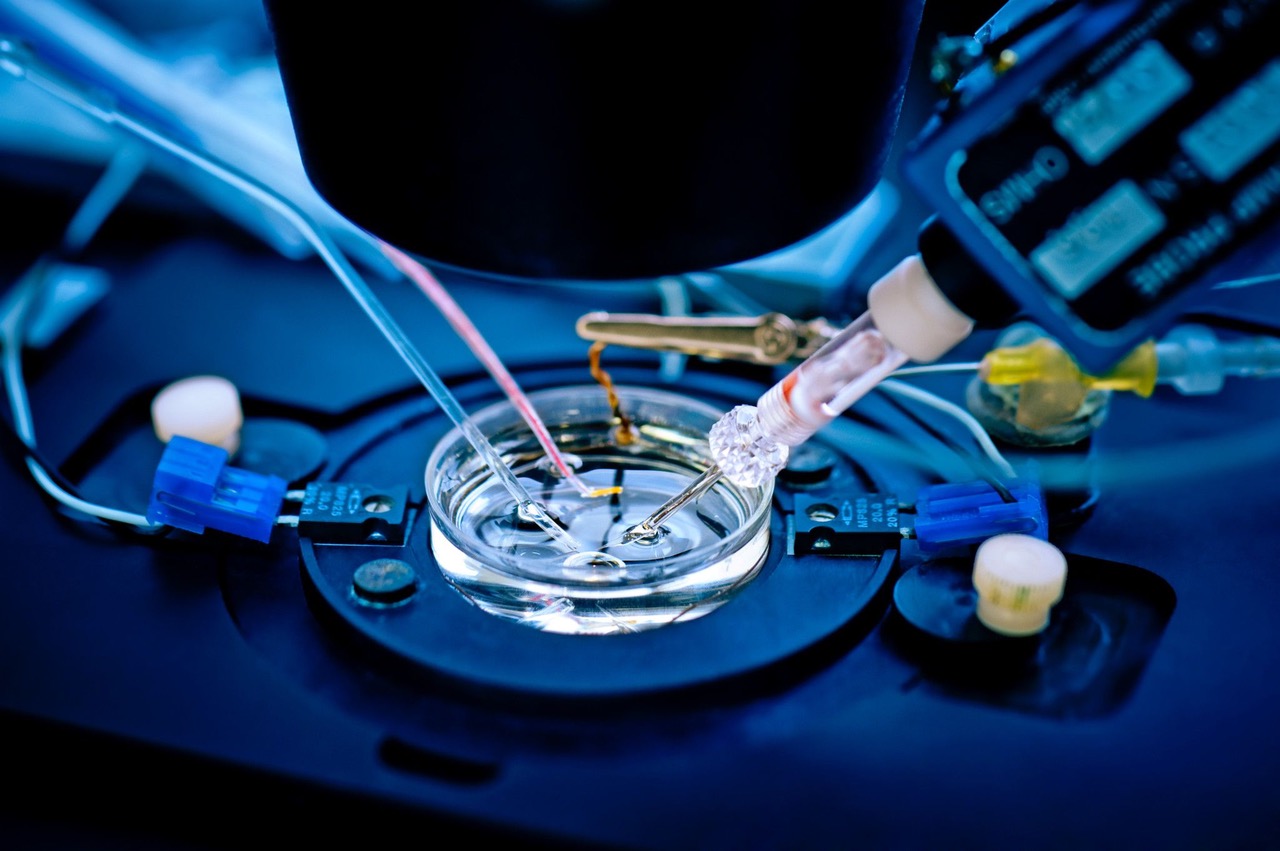
DYNABIO is dedicated to advancing cutting-edge research in systems and computational biology, with a central focus on the architecture, dynamics, and interactions of biomolecular networks. The interdisciplinary approach of DYNABIO bridges biology with computer science, mathematics, chemistry, and physics. Research carried out within DYNABIO teams spans a wide range of biological models and addresses fundamental questions in biological mechanisms, pharmacology, cell and developmental biology, and agrosciences to understand the roles & regulatory principles of biological networks in the development and function of organs and organisms as well as in human disease etiologies (cancer, inflammation, cardiometabolic disease, aging, immune and neurological disorders) and plant-microorganism interactions.
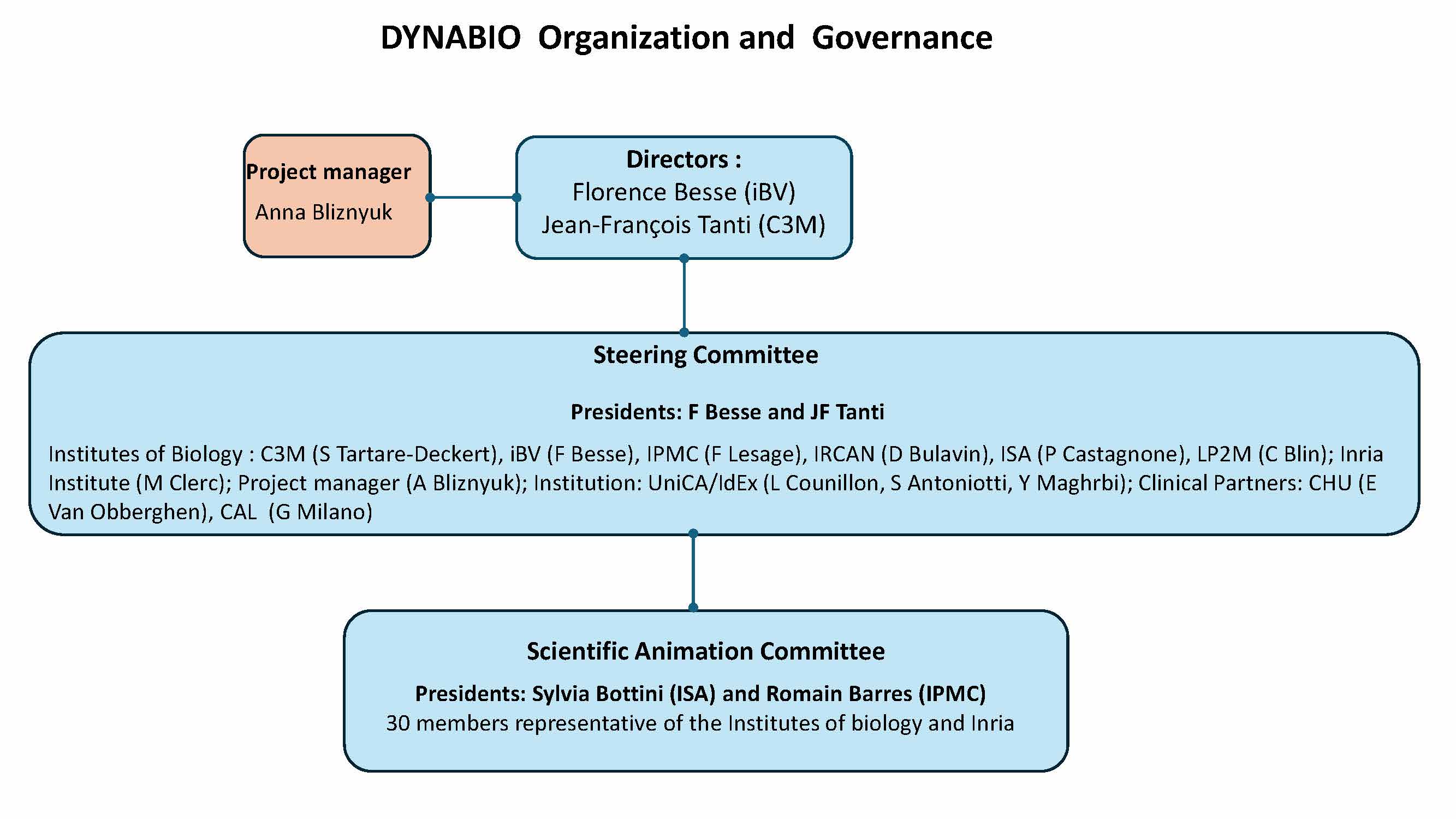
DYNABIO Organization
- Codirectors
- Steering committee and scientific animation committee
-
DYNABIO calls
1. DYNABIO Interdisciplinary Research Chairs
- Objective of the call
-
- DYNABIO is launching an international call for Interdisciplinary Research Chairs to recruit new group leaders working at the interface of different disciplines within one of the DYNABIO-affiliated biology institutes (C3M, iBV, IPMC, IRCAN, ISA).
- Start-up package of €500,000 covering operating costs and salaries including the chair holder one.
- The host institute will provide office and lab space, basic laboratory equipment, and full access to state-of-the-art core facilities.
- DYNABIO is committed to supporting the Chair holder in securing long-term academic positions.
- Positions available
-
- Group leader position in Biological Data Science to develop an innovative research program at the interface of biology and computer sciences
- Group leader position in Chemistry of Biological systems to develop an innovative research program at the interface of chemistry and biology
- Group leader position in Biological Network modeling to develop an innovative research program at the interface of biology, applied mathematics and/or physics
- Eligibility
-
The call is open to candidates of all nationalities, including those already holding permanent positions in France but external to Université Côte d’Azur.
- Application Procedure and Deadline
-
Applicants should submit their application as a single PDF file organized as follows:
- Applicant’s full name, contact information (email, phone), project title, and the targeted host institute(s)
- Cover letter (1 page)
- Summary of past research activities (2 pages)
- Project description (4 pages): objectives, rationale, methodology, novelty, feasibility, and added value to the DYNABIO network and host institute
- Curriculum vitae and full list of publications (2 pages)
Applications should be submited to the DYNABIO direction (florence.besse@univ-cotedazur.fr and jean-francois.tanti@univ-cotedazur.fr) as well as up to 2 candidate host institutes (see contact list below). The reference of the chair (Biological Data Science, Chemistry of Biological systems or Biological Network Modeling) and the name of the targeted Institutes should appear on the main front page.
Contact list- C3M: sophie.tartare-deckert@univ-cotedazur.fr
- iBV: ibv.direction@univ-cotedazur.fr
- IPMC: lesage@ipmc.cnrs.fr
- IRCAN: dmitry.bulavin@univ-cotedazur.fr
- ISA: philippe.castagnone@inrae.fr
Timeline- Application deadline: December 1, 2025
- Onsite interview of the shortlisted candidates: April-May 2026
- Start of the group leader position: October 2026-July 2027
2. DYNABIO PhD program
Joint Ph.D. grantsThe Graduate School of Life & Health Sciences (EUR LIFE) and the two IdEx Structuring Programs (PSI), DYNABIO and Ion Channels, are pleased to announce a joint call for eight 3-year PhD contracts:
- 3 contracts funded by DYNABIO
- 3 contracts funded by Ion Channels
- 2 contracts funded by the EUR LIFE
Results
The 2026 PhD Call of the DYNABio IdEx Structuring Program attracted strong interest from the scientific community, with 32 proposals submitted, 8 projects shortlisted for interviews, and 3 projects selected for funding.
- Funded projects
-
Decoding the role of Glutamylation in Endocytic trafficking functions and liver metabolism
- Principal Investigators: Jérôme Gilleron, Stéphanie Torrini
- Laboratory: C3M/IPMC
- PhD Candidate: Damien Barani
- Research Area: Metabolism and Cell Biology
Decoding Olfactory Control Of Developmental Timing: From Sensory Neurons To Predictive Chemistry
- Principal Investigators: Nuria Romero, Jérémie Topin
- Laboratory: ISA/ICN
- PhD Candidate: Gustavo Chachaima Caceres
- Research Area: Neurobiology of Development and Environmental Sensing
Microbiota-derived metabolites as biomarkers and mediators of social deficits in autism: insights from mice and humans
- Principal Investigators: Laetitia Davidovic, Nothias Louis-Félix
- Laboratory: IPMC/ICN
- PhD Candidate: Chloé Jallabert
- Research Area: Neurodevelopmental Disorders and Microbiota–Gut–Brain Interactions
- Selection process
-
The DYNABio Doctoral Programme call attracted strong interest from the scientific community, with 32 applications submitted. Following eligibility checks, all proposals were evaluated by a preselection committee composed of six members of the DYNABio Scientific Advisory Committee (CAS) and fourteen external experts, ensuring an independent and multidisciplinary assessment of scientific excellence and interdisciplinarity.
Eight projects were shortlisted for interviews and invited to present their research during joint auditions held on 22–23 June 2026. Among these shortlisted projects, four were interdisciplinary proposals and four were biology-focused projects. The auditions were conducted by a joint DYNABio–Ion Channels–EUR LIFE jury composed of 13 members representing biology, chemistry, mathematics, physics and computer science. The jury also included representatives from the main DYNABio partner institutes (C3M, iBV, IPMC, IRCAN and ISA), ensuring broad institutional and disciplinary representation.
Following the evaluation process, three PhD projects were selected for funding within the DYNABio programme. Among the selected projects, two were interdisciplinary proposals and one was a biology-focused project. Two additional projects were placed on a reserve list pending final validation.
This rigorous selection process reflects DYNABio’s commitment to supporting innovative, interdisciplinary and high-impact research at the interface of life sciences and quantitative sciences.