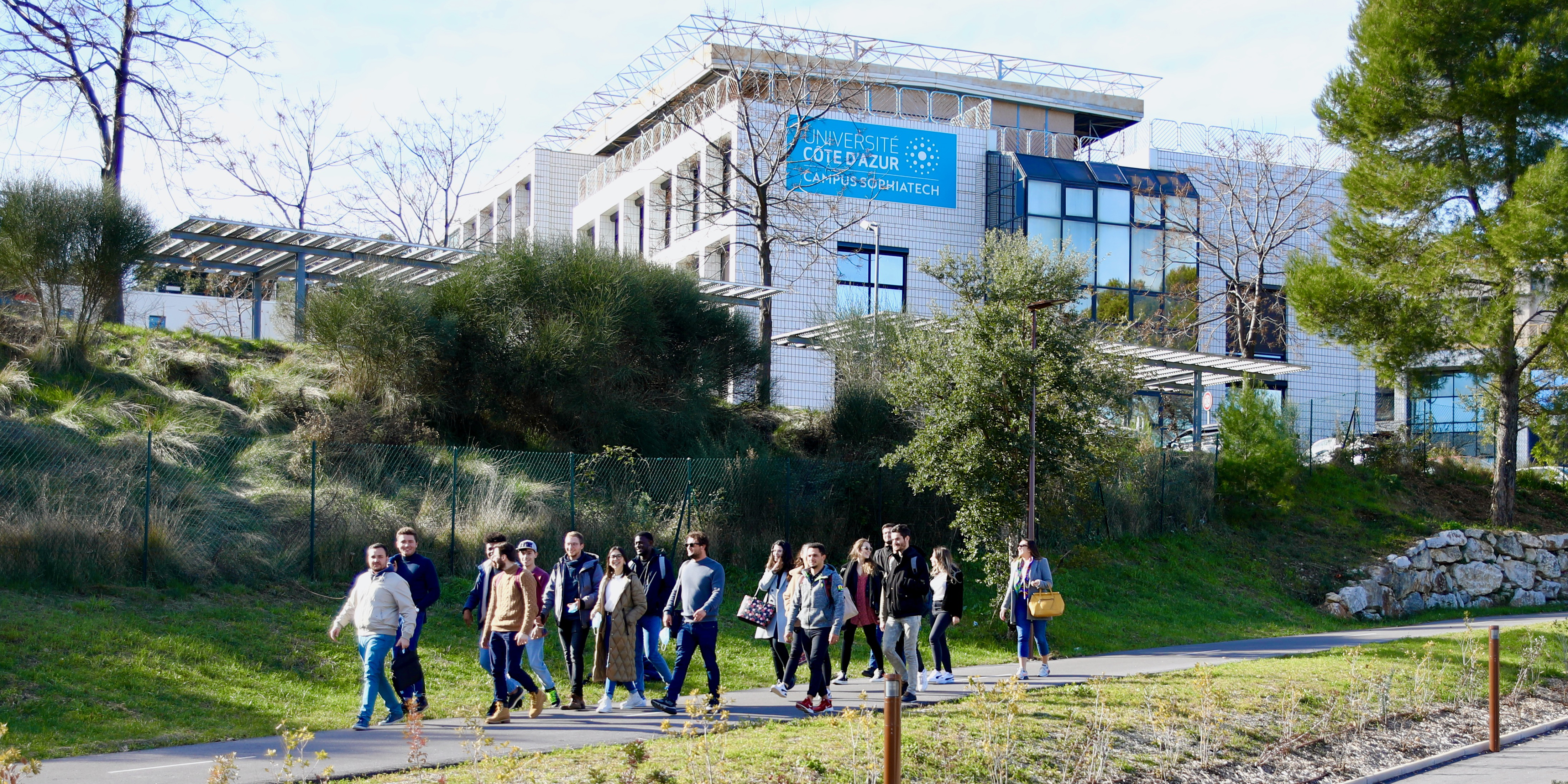
Taught entirely in English, the Ubinet track of the Master’s in Computer Science program trains experts to meet the challenges and make the technological choices of tomorrow in the fields of the Internet, Telecommunications, and Distributed Systems.
Read more
Objectifs
Initial training
/
Executive Education Program
/
Alternance (Apprenticeship, Contrat de professionnalisation)
Master
1 an
École Universitaire de Recherche Systèmes Numériques pour l’Humain
Campus SophiaTech - Site des Templiers
English
Details
UbiNet Track Highlights
Taught entirely in English, an international dimension
Dual degrees and exchange programmes with leading international universities of technology
Courses backed by leading research laboratories (Inria, CNRS) in Sophia Antipolis
Tailor your study program with minor courses, projects, career events, competitions, hackathons...
Target Jobs
Research and Higher Education
Industrial R&D centres
Major tech and infrastructure companies
Technological innovation consultancy firms
Target Skills
Expertise in Networks and Cloud Infrastructure
Distributed Systems and High-Performance Computing
Algorithms and AI as optimisation tools
Research and Innovation (R&D) Methodology
Read more à propos de la Weekly load of work
2027/2028 Admission Process
Selective
Yes, Find out more in the Admission section
SophiaTech Campus
Study in the heart of Sophia Antipolis, Europe’s leading technology park.
The Ubinet track of the Master's in Computer Science aims to provide students with excellent academic or industrial career opportunities by offering high level coverage of networking principles that will help students to meet the challenges and make the technological choices of tomorrow in the domains of the Internet, Telecommunications and Distributed Systems. Taught entirely in English to attract the best talent from around the world, the courses draw on the ecosystem of excellence at Sophia Antipolis.
The program benefits from significant scientific support thanks to close partnerships with internationally renowned laboratories such as i3S and Inria.
The technical core of the program focuses on network and distributed systems modeling (HPC), where AI and algorithms are used as scientific levers to optimize flow control and energy efficiency.
By cultivating a high level of methodological rigor, the curriculum prepares ubinetters to produce original contributions and lead complex projects in academic laboratories or cutting-edge industrial R&D centers.
Pedagogy
The teaching team, composed of researchers and teacher-researchers from the i3S laboratory and the Inria Center at Université Côte d'Azur, provides direct immersion in the most current research issues.
The program's teaching methods are tailored to the nature of the subjects taught in order to offer a comprehensive curriculum. It is structured around two complementary formats:
Fundamental subjects: certain modules, focused on the theoretical foundations of computer science, emphasize in-depth lectures to consolidate conceptual knowledge.
Applied modules: other courses strike a balance between lectures and tutorials/practical sessions, allowing for the immediate application of technical knowledge.
Professional Integration
The curriculum is structured to transform these skills into expertise through two major stages of professionalization:
The research project (semester 3): a technical immersion allowing students to tackle complex issues. A true first point of contact with the state of the art, this project is supervised by researchers from partner laboratories (i3S, Inria).
These two key experiences enable students to define their career path: they form the basis for specialization with a view to pursuing a doctoral thesis or strategic professional integration into cutting-edge industry.
Throughout the year, our students are offered a program of events designed to develop their knowledge and networks and facilitate their entry into the job market: IT career fair, industry conferences, practical workshops (resumes, cover letters, interviews), meetings with experts, job dating, and more.
La Nuit de l'Info : a national competition to develop a web application... overnight!
The Doctoriales, a annual event to find out what a PhD Student's life look like.
Do a work-study placement in a research laboratory
to prepare for your PhD studies
Expertise in Cloud Networks and Infrastructure: Design and automate complex, highly available virtualized infrastructures for the cloud and data centers.
Distributed Systems and High-Performance Computing: Master parallel (HPC) and distributed computing. Optimize the scalability, latency, and energy efficiency of massive systems.
Algorithms and AI as Optimization Tools: Mobilizing AI and machine learning as technical levers to automate network management and dynamic resource allocation.
Methodology: Managing R&D projects using a rigorous scientific approach to produce and disseminate specialized knowledge in digital systems.
This Master's degree program in Computer Science is part of the curriculum offered by the Digital Systems for Humans Graduate school (EUR DS4H).
The School encourages students to broaden their digital horizons by combining their coursework with a wide range of à la carte semester options: minor courses in law, business, computer science, AI, strategy and innovation, creative industries, entrepreneurship, etc., immersive research projects in laboratories, and multidisciplinary creative projects. Each student can thus develop a unique professional profile by acquiring the cross-disciplinary skills valued by companies, the research community, and start-ups.
In partnership with leading research laboratories and a dynamic network of corporate partners, the School also aims to create opportunities for students: scientific and professional events, programming competitions, international mobility, etc. are all opportunities to learn outside the classroom and successfully enter the job market. Find out more...
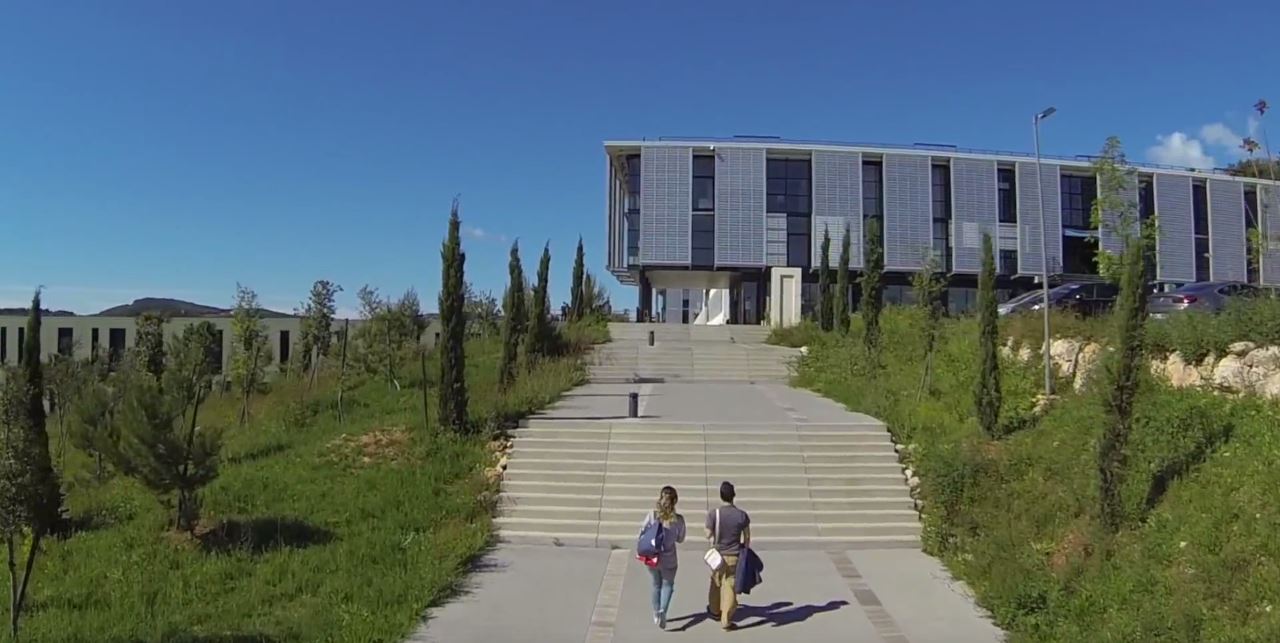
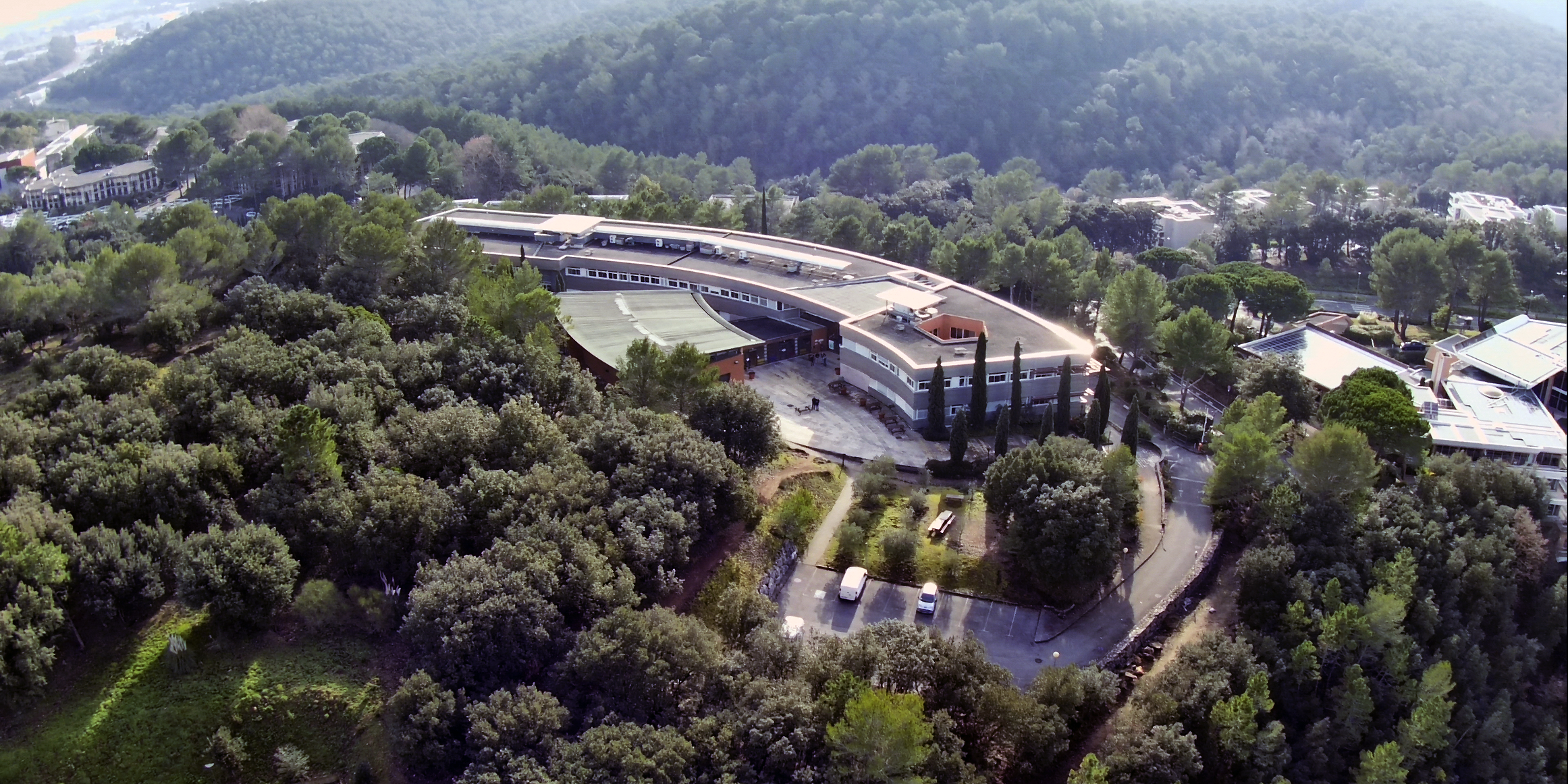
SophiaTech is the Université Côte d'Azur campus dedicated to information and communication technologies, located in the heart of Sophia-Antipolis, Europe's leading technology park, near Cannes, Antibes, and Nice.
The Master's in Computer Science is backed by internationally renowned computer science research laboratories, ensuring that students receive teaching that is directly in line with the latest developments in the field.
Students from the universities listed below are eligible for a dual degree scheme with the UbiNet track of the Université Côte d’Azur’s Master’s in Computer Science. They can therefore be awarded both the Master’s degree in Computer Science from Université Côte d’Azur and the degree from their home university.
Under the academic exchange agreements within the UbiNet programme, students from the following institutions are eligible to undertake their M2 year in France.
The program is designed for those having completed four years of University (either a three-year Bachelor program and a first year of Master of Science or a four-year-long Bachelor) in either computer science, networking, applied mathematics, or electrical engineering.
Required Language Level :
B2 in English
Prerequisites:
Very strong foundation in Mathematics
Very strong skills in Algorithmics
Very strong skills in programming (object-oriented programming, C programming, and systems programming)
The application process is fully digital. No documents received by mail or email will be considered. Only applications submitted within the specified time frame and via the official application platforms will be reviewed.
Your application must contain the following documents, which will be used to evaluate your candidacy:
Mandatory:
Transcripts
Matières examinées : Matières informatiques
Matières fondamentales pour lesquelles l’absence de connaissances est rédhibitoire : en cohérence avec la composition de la mineure choisie (cf onglet Programme)
Le redoublement ou la compensation sont-ils des critères d’appréciation ? OUI
Analyse de la cohérence entre le parcours suivi et le diplôme envisagé ? OUI
Motivation Letter and Professional Project Description
Cohérence entre le diplôme envisagé et le descriptif du projet professionnel. La lettre devra impérativement contenir un choix argumenté de la mineure choisie qui sera un critère très important.
Qualité rédactionnelle (orthographe, défaut de structure ou de syntaxe).
Cohérence de la réflexion (développement de l’argumentaire).
Detailed CV
Elément de synthèse permettant de découvrir les compétences utiles acquises dans le cadre d’expériences précédentes et de cerner des éléments de personnalité du candidat
Optional:
Recommendation Letters
La (les) lettre(s) de recommandation ne rentrent pas dans les critères de sélection mais permettent d’apporter un soutien à la candidature
English Level
CECRL B2 level required
Professional Experience Supporting Documents
Ces éléments permettent d’apprécier l’adaptation du profil aux exigences du diplôme souhaité
The Master 2 in Computer Science, Ubinet track, concludes with a mandatory 6-month paid internship for non-work-study students (or full-time work experience for work-study students).
Interships can be held in in one of the research teams Diana (Inria), Neo (Inria), Kairos (Inria/i3S), Coati (Inria/i3S), Scale (i3S), SigNet (i3S), Modalis (i3S) Rainbow (i3S), Indes (Inria), etc. or with one of the companies in Sophia Antipolis: Orange Labs, SAP, THALES, AMADEUS, etc. List of internships proposed at i3S and Inria laboratories in 2025/2026 is available here.
The Digital Systems for Humans Graduate School encourages its students to complete part of their studies and internships abroad. Its dedicated International Relations department provides them with advice, administrative support, and funding options to help them realize their plans to study abroad. What are the different types of mobility programs, where can you go, and what financial aid is available? Click here to find out more.
Initial Program - The schedule for the Master’s in Computer Science (UbiNet track) is as follows:
From September to late February: 5 days a week in the University
From March to September: full-tie internship in a company or a laboratory
School and work experience alternating
Work-study Program - The schedule for the Master’s in Computer Science (UbiNet track) is as follows:
3 days in the University / 2 days in a company or a laboratory.
Useful Information:
Every spring, the EUR Digital Systems for People organises a careers fair to give you the opportunity to meet companies and find a work-study placement.
A wide range of resources is available on the Formasup Méditerranée website – the CFA (Apprenticeship Training Centre) for partner universities and schools in the Sud region – including a work-study guide, advice on finding a work-study placement, a salary calculator and more.
Successful completion of this program leads to the award of the Computer Science Master degree (Master Informatique) from the Digital Systems for Humans Graduate (DS4H) school of Université Côte d'Azur in France. This degree will enable graduates to pursue a PhD in Europe.
PhD globally recognized degree opens the door to numerous career opportunities in computer science in both the private and public sectors, in France and internationally, in positions such as professor-researcher, researcher, and research engineer.
Locally, doctoral students from Université Côte d'Azur's Doctoral School of Information and Communication Sciences and Technologies are integrated into the teams of research laboratories partnering with the Digital Systems for Humans Graduate School or into the research and development laboratories of companies in the Sophia Antipolis technology park.
Host Company: 11 000 € (excluding the student's salary)
Executive Education:
255 €/year + fees prorated according to the number of ECTS credits (on the basis of 6700 € / 60 ECTS)
Depending on your personal situation, different amounts may apply.
Excellence Scholarship for International Students
The Excellence Scholarship "WINGS" Program from the DS4H Graduate School offers outstanding students the chance to receive a grant for the UbiNet track. This will be a decision from the Ubinet Program Committee. Key conditions: being a non-French citizen and having studied outside France, do the Master Internship with one of the Ubinet research teams. Find out more...
* "EU nationals" students are nationals of European Union member states (Austria, Belgium, Bulgaria, Croatia, Cyprus, Czech Republic, Denmark, Estonia, Finland, France, Germany, Greece, Hungary, Ireland, Italy, Latvia, Lithuania, Luxembourg, Malta, Netherlands, Poland, Portugal, Romania, Slovakia, Slovenia, Spain, Sweden), European Economic Area member states (EU + Iceland, Liechtenstein, Norway), Switzerland, and the United Kingdom. Czech Republic, Romania, Slovakia, Slovenia, Sweden), member states of the European Economic Area (EU + Iceland, Liechtenstein, Norway), Switzerland, Monaco, Andorra, and the province of Quebec (Canada). Students with refugee status or subsidiary protection are also covered by these rights.
After receiving confirmation of your admission to this program, you will need to complete your administrative registration. The procedures and registration deadlines vary depending on your situation.