


















En quelques mots
This project aims to investigate how different formats of climate-related information—specifically virtual-reality (VR) immersion, 2D video viewing, and text-based reading—shape individuals’ emotional responses, social cognition, climate anxiety, and risk-related decision-making in the context of climate-change mitigation.
PROJET DE RECHERCHE
de l'AXE 2
DATE : 2026
RESPONSABLE : CHESSA Michela, GREDEG
DISCIPLINES : Experimental & Behavioural Economics, Psychology
MOTS-CLÉS : Virtual Reality, Climate change mitigation, Decision-making under risk, Social Cognition, Climate Anxiety
Description du projet
CONTEXTE
Although VR is increasingly used in psychology, its application in behavioral and experimental economics remains limited. Few studies have examined how immersive formats influence economic decisions related to climate risks. VR offers a methodological innovation by recreating realistic situations in a controlled environment, thereby reducing the gap between laboratory tasks and real-world decision-making. In this context, our project seeks to establish virtual reality as an innovative tool in experimental economics.
Effective policymaking to address the well-established challenge of climate change requires, first and foremost, a clear understanding of how individuals respond to the various preventative measures and awareness campaigns that can be implemented.
OBJECTIFS
This project aims to investigate how different formats of climate-related information—specifically virtual-reality (VR) immersion, 2D video viewing, and text-based reading—shape individuals’ emotional responses, social cognition, climate anxiety, and risk-related decision-making in the context of climate-change mitigation. In a laboratory experiment, individuals are provided one of the three different information exposures. Then, the goal is to investigate how behavior in a risky agricultural choice task—where individuals select crops differing in resilience and expected yield—changes depending on the exposure condition. In particular, is tested the hypothesis that immersive technologies such as VR can reduce psychological distance and produce a stronger sense of presence—the psychological impression of “being there”— increasing perceived realism. The hypotesis is that VR elicits more effective reactions (higher social cognition, higher climate anxiety and less risk-taking choices) from individuals compared to more traditional formats, including written materials (e.g., articles, flyers, or online posts) and videos (e.g., films, television documentaries, or online content). Emotional responses to the different stimulus formats are measured using validated psychological questionnaires, together with perceived presence and concern about future environmental conditions.
MÉTHODE
The experiment will be run with around 300 students, randomly assigned to one of three treatments: a VR condition, a 2D video condition, and a text condition presenting the same climate-related information. The experiment will be programmed in oTree, a widely used platform in experimental economics (Chen et al., 2016). For the VR immersive treatment, participants will use the VR devices available at CoCoLab, either the HTC Vive Pro headset, or the Varjo XR-4.Interdisciplinarité et partenariats
RESPONSABLE DU PROJET
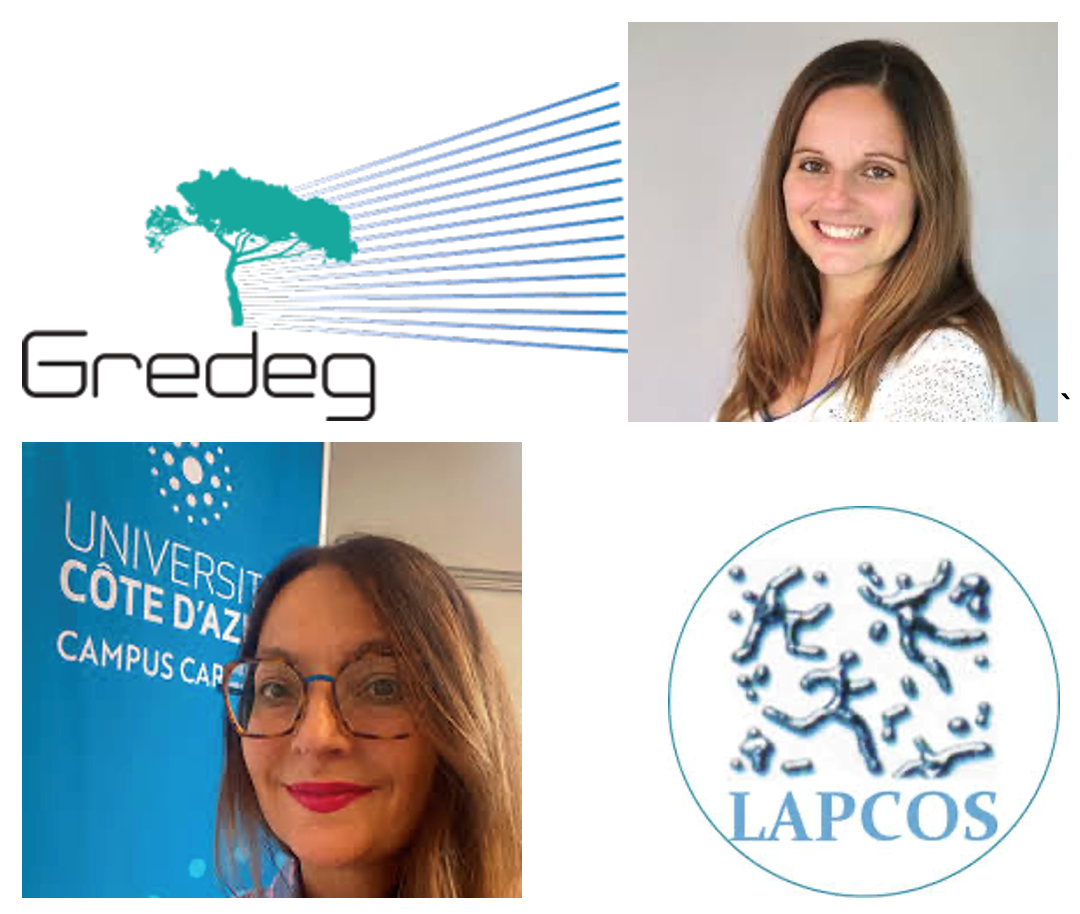
Michela CHESSA, Maître de Conférences en Sciences économiques au Groupe de Recherche en Droit, Economie, Gestion (GREDEG), Université Côte d’Azur
Galina IAKIMOVA, Professeure au Laboratoire d'Anthropologie et de Psychologie Cliniques, Cognitives et Sociales (LAPCOS), Université Côte d’Azur
PARTENARIATS
La Maison des Sciences Humaines et Sociales Sud-Est (MSHS Sud-Est), Complexity and Cognition Lab (CoCoLab), UniCA
Résultats et valorisation
- Publications
-
À venir
- Conférences
- Diffusion de la recherche
- ANR et autres financements