Learn how to design, develop and manage innovative digital solutions, acquiring the skills needed to adapt to rapid technological change and meet the needs of the socio-economic world.
Read more
Objectifs
Initial training
/
Executive Education Program
/
Accessible for resumption of studies
/
Alternance (Apprenticeship, Contrat de professionnalisation)
Master
2 years
École Universitaire de Recherche Systèmes Numériques pour l’Humain
Campus SophiaTech - Site des Lucioles / Campus SophiaTech - Site des Templiers
French / English
Details
Highlights
90% employment rate (2024 graduates after 18 months)
Courses backed by leading research laboratories (Inria, CNRS) in Sophia Antipolis
A wide range of optional modulesto personalise your study programme
Projects, work placements, professional events, programming competitions to put your knowledge into practice
Program 100% in English possible
Choose your modules from the wide range of those taught in English *
The Master’s in Computer Science is a two-year programme that is both scientific and technical. It aims to train professionals for industry or research who are capable of designing, developing and managing innovative digital solutions.
Elisabetta De Maria
Master' in Computer Science Coordinator
Digital technology is transforming our societies at a rapid pace and requires professionals who can master the fundamentals of computer science whilst adapting to technological innovations. The Master’s in Computer Science at Université Côte d’Azur meets this need by training well-rounded specialists who are attuned to current challenges and capable of designing, developing and deploying robust, intelligent and responsible software solutions.
Backed by leading research laboratories and working closely with the technological ecosystem of Sophia Antipolis (European largest technopark), our programme offers teaching of the highest standard, combining core modules, projects, guest lectures by industry professionals, work placements and work-study schemes.
Over the course of their studies, our students build a rich and customisable programme of study that enables them to explore the many facets of computer science: algorithms, software engineering, data, AI, cybersecurity, distributed systems and many others.
We are committed to supporting them on their path to success, whether that means securing employment quickly or going on to pursue a PhD. Their creativity, curiosity and commitment make our graduates key players in the digital innovation of tomorrow.
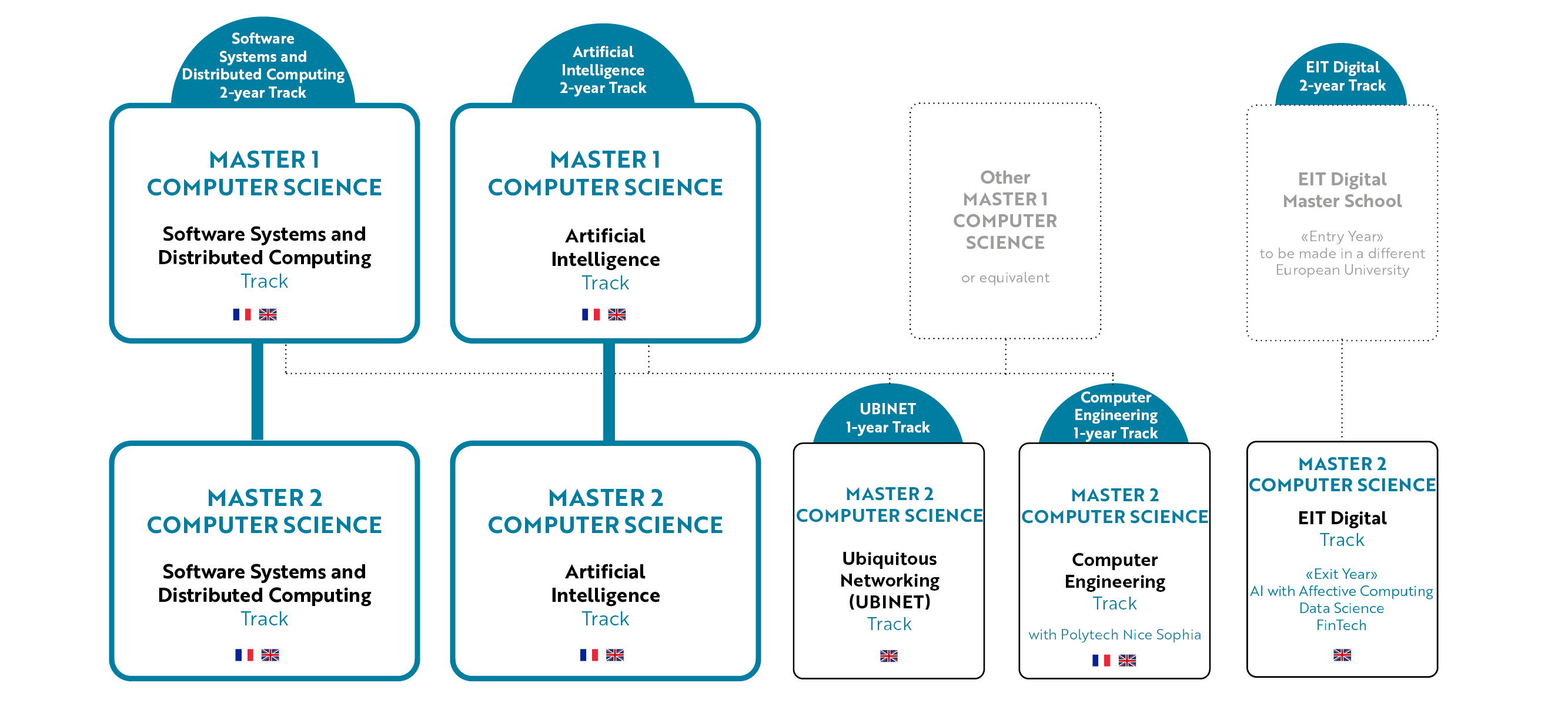
The Master’s in Computer Science offers a range of specializations to prepare students for the wide variety of career opportunities available in the field of computer science:
Research
Software development
Artificial intelligence
Information systems
Network administration
Data science
Cyber security
Multimedia, etc.
Find out more about the Master's in Computer Science tracks:
Based on a approach of progressive specialisation over the course of the two years, the Master’s in Computer Science aims to develop high-level technical skills. It also enables students to acquire methodological and organisational skills, enabling them to manage complex projects in a constantly evolving field.
This programme teaches students to recognise and understand the fundamental concepts and principles of computer science. They gain a thorough understanding of the links between the various aspects of computer science, enabling them to apply methods and techniques from one area to another in order to design, implement and integrate applications.
Upon completion of the Master’s degree, students will be able to manage large-scale IT projects, including the quality standards required to design their architecture and to integrate and adapt them into existing systems.
The compulsory internship (in a company or laboratory) and the various individual or team projects ensure that students put what they have learnt into practice.
Are you interested in AI?
If you are interested in artificial intelligence, you can choose a specialised pathway at Université Côte d’Azur:
Bachelor’s (Licence) in Science and Technology, Artificial Intelligence pathway, which shares its first three semesters with the Bachelor’s (Licence) in Computer Science (transfer option available)
Master’s in Computer Science, specialising in Artificial Intelligence
Master’s in Computer Science, specialising in Computer Engineering, with a minor in Artificial Intelligence – Data Engineering
MIAGE Master’s, specialising in Applied Artificial Intelligence (IA2)
Places on these courses are subject to sufficient capacity and the student’s profile being suitable.
Our lecturers and researchers, who come from public research laboratories, deliver teaching that is closely aligned with the latest scientific and technological advances. These courses are accredited by the 3IA Côte d’Azur Institute.
The Master’s in Computer Science is open to work-study students
Work-study programmes enable students to combine high-level university education with paid work experience.
The work-study contract covers the duration of the degree programme: 2 years when started in the first year, or 1 year when started in the second year.
Work-study schedule for the Master’s in Computer Science: rotation of 3 days at university and 2 days in a company or a laboratory (see details on each track webpage).
Work-study in practice:
A job fair is organised every spring by the Digital Systems for Humans Graduate school (EUR DS4H) to enable you to meet companies and find a work-study contract.
A wide range of resources is available on the Formasup Méditerranée website, which is the CFA (Apprenticeship Training Centre) for partner universities and schools in the French Sud region (work-study programme guide, advice on finding a work-study placement, salary calculator, etc.).
Meet companies and find a work-study contract at the Job Fair "Forum de l'Alternance".
Events and Career Development
Throughout the Master’s programme, our students are offered a programme of events designed to expand their knowledge and professional networks and to facilitate their entry into the job market: IT careers fair, sector-specific conferences, practical workshops (CVs, cover letters, interviews), meetings with experts, job dating events, and more...
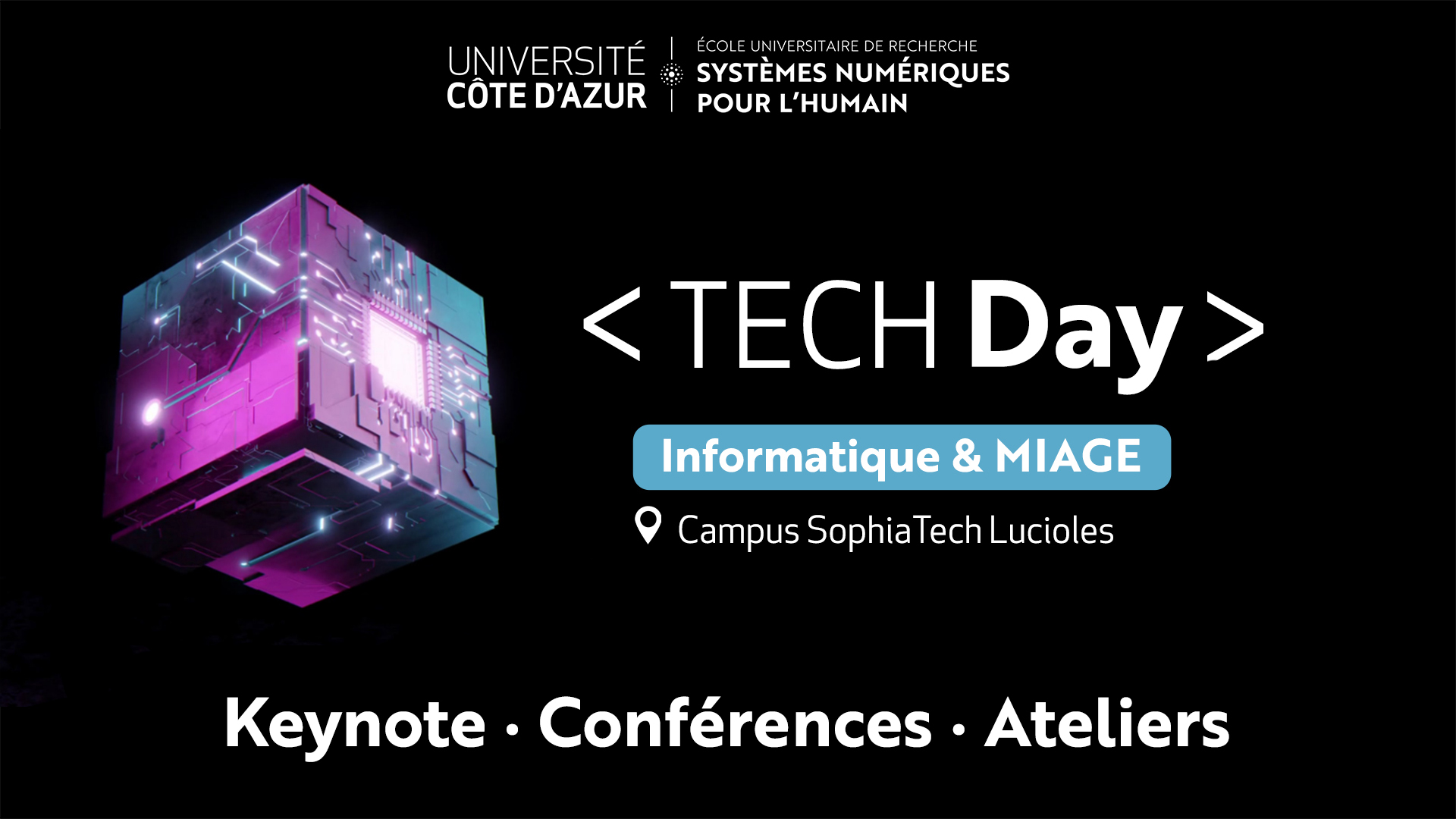
TECH Day - Leading figures in the tech sector analyse the latest digital trends.
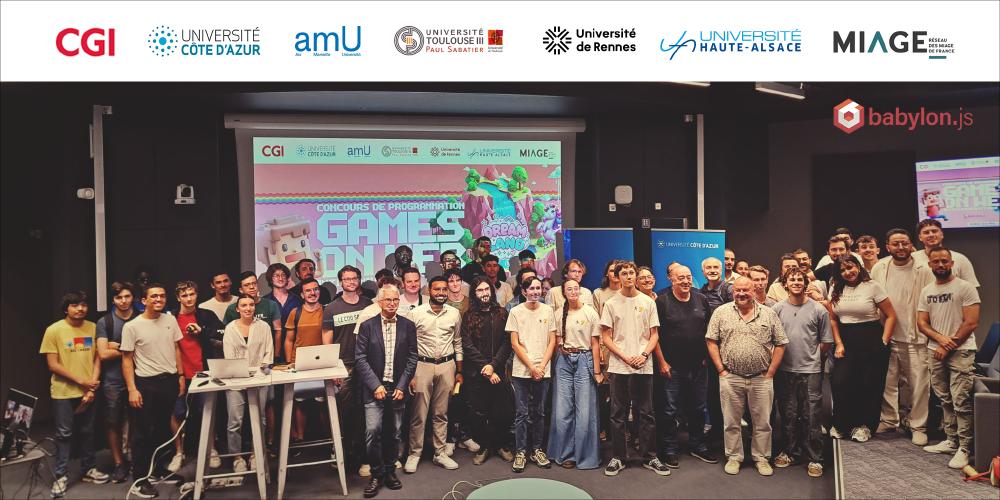
Games on Web, inter-university 3D web game programming competition
This Master's degree is offered by the Digital Systems for Humans (DS4H) Graduate School.
The DS4H Graduate school offers you the opportunity to enrich your curriculum with a unique catalog of multidisciplinary courses (minors), tutorships (laboratory immersion) and group projects. By combining these options, over the semesters, you build your "à la carte" training program according to your personal and professional goals.
In partnership with the leading digital science research laboratories of Université Côte d'Azur, DS4H Graduate school offers an innovative vision of the digital world, that go beyond traditional disciplinary compartmentalization.
It offers you the opportunity to acquire the sought-after competencies (technical skills and "soft skills") for your future career in research, higher education, research and development, industry and services, start-ups, etc. > Learn more about the DS4H Graduate school training program
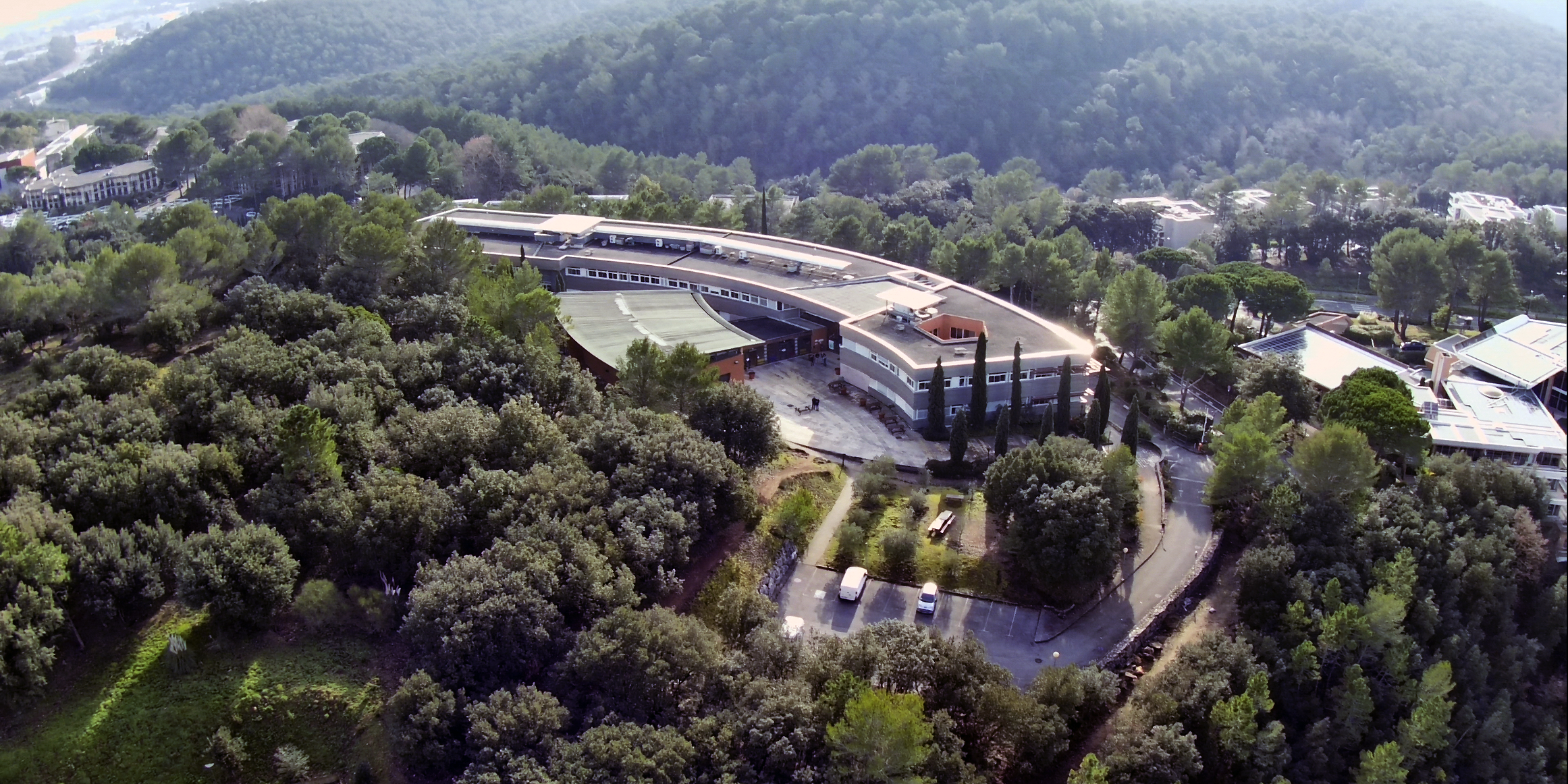
The Master’s in Computer Science courses take place on the SophiaTech campus (Templiers or Lucioles site, depending on the chosen track).
Courses for the DS4H minor may take place on other campuses.
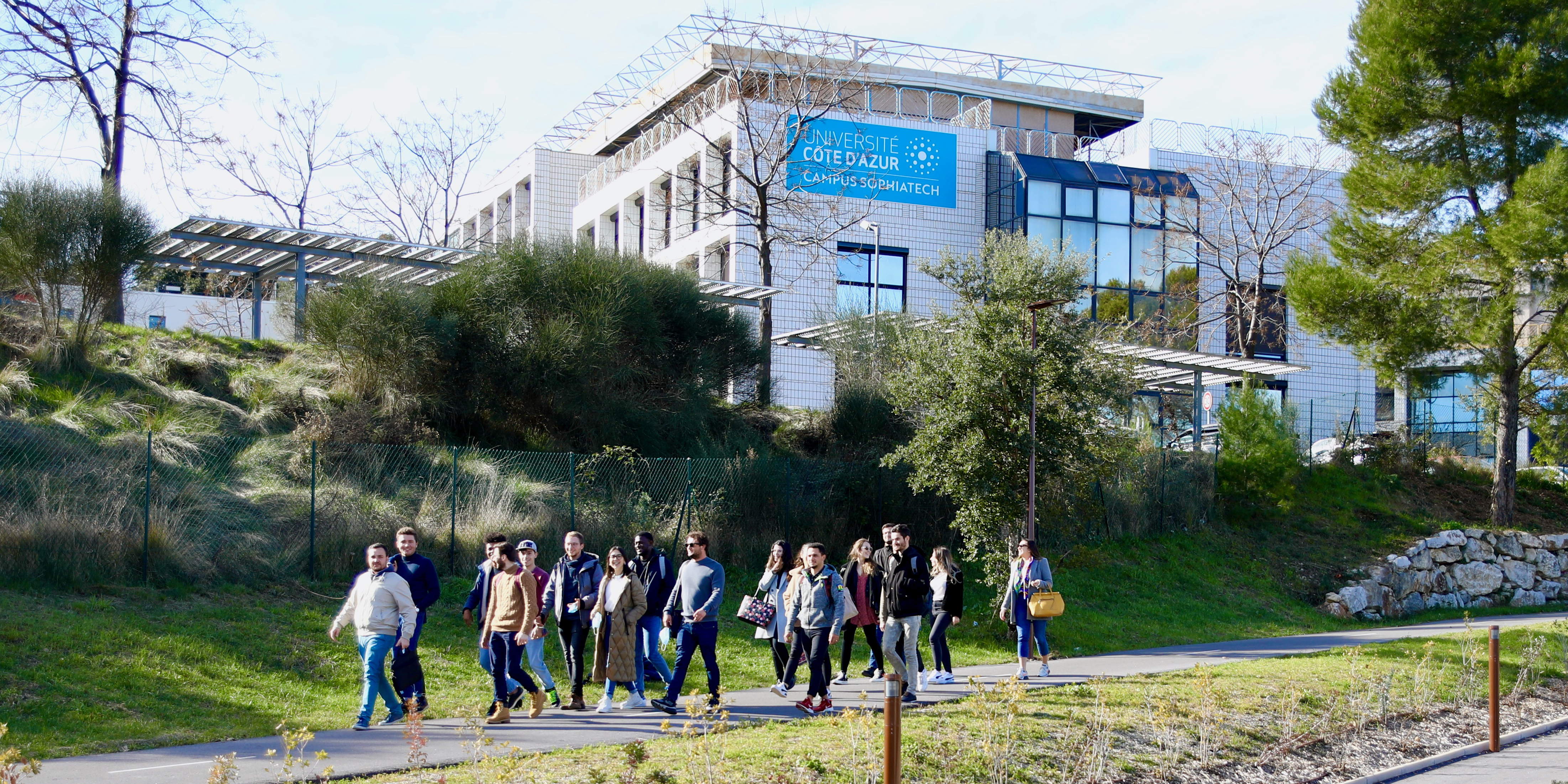
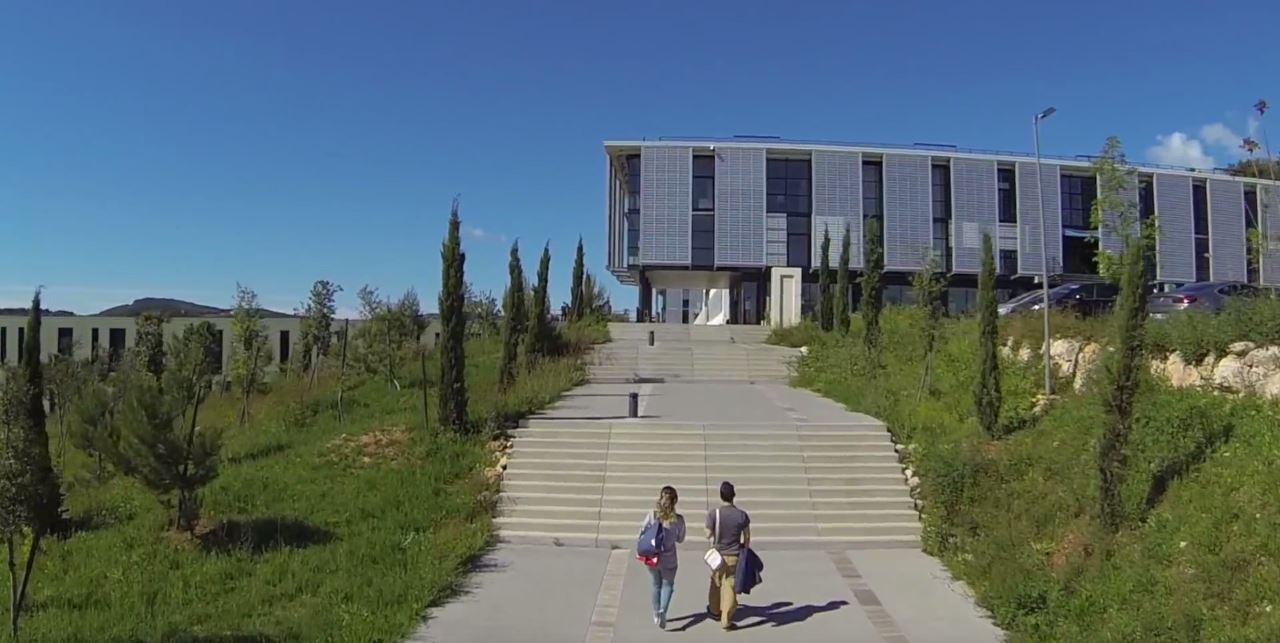
SophiaTech is the Université Côte d’Azur campus dedicated to information and communication technologies, situated in the heart of Sophia-Antipolis, Europe’s leading technology park, near Cannes, Antibes and Nice.
The Master's degree in Computer Science is backed by internationally renowned research laboratories in computer science, which ensures that students receive instruction that is in direct contact with the state of the art. It benefits from close connections with the socio-economic players in the digital sector in Sophia-Antipolis, Europe's leading technology park.
The French Riviera offers an optimum environment for high tech business, R&D, research and higher education. The Digital Systems for Humans Graduate school benefits from this very rich industrial and innovation ecosystem including world-class companies, SME, start-ups and competitiveness clusters.
Sophia Antipolis is Europe's leading technopole. It brings together world leaders, researchers, SMEs and start-ups in an exceptional natural environment of 2,400 hectares. The Sophia Antipolis Science Park is a place of innovation, providing companies with cutting-edge technologies and expertise in the fields of Information and Communication Technologies, in particular the Internet of Things and the Connected Vehicle, Biotechnologies and Earth and Energy Sciences.
Nice is the first European city to have deployed a bouquet of services based on mobile contactless technology (NFC). Numerous experiments are being implemented on its territory by world leaders (Cisco, IBM, Orange, ErDF, Schneider Electric, etc.) on the theme of the smart city, as well as e-health and the Silver Economy.
The Plaine du Var's eco-valley is listed as a "national interest operation", and is set to position the Côte d’Azur as an international leader in the fields of cleantech and sustainable development
Admission to the Master’s programme is selective.
Students applying for the work-study Master’s in Computer Science must state very clearly in their application either their intention to undertake a work-study placement or the name of a company willing to take them on. The work-study placement topic must be approved by the work-study coordinator.
2027/2028 Applications
Application for the M1 in Computer Science: MonMaster procedure
This procedure applies only to students who are residents of, or nationals of, one of these countries.
From 1 October 2026, via the ‘Etudes en France’ platform – The deadline for applications is set by each embassy.
The application process is conducted online. No documents received by post or email will be considered.
Only applications submitted within the specified deadlines and via the official application platforms will be considered.
Every year, a number of graduates from the Master’s degree in Computer Science go on to study for a PhD, either in France or abroad.
Employed by a research laboratory or a company, PhD students undertake an original research project over three intensive years, culminating in the defence of their thesis.
This globally recognised qualification (PhD) opens the door to numerous career opportunities in computer science within both the private and public sectors, in France and internationally, in roles such as lecturer-researcher, researcher and research engineer.
Locally, doctoral students from Université Côte d'Azur's Doctoral School of Information and Communication Sciences and Technologies are integrated into the teams of research laboratories partnering with the Digital Systems for Humans Graduate School or into the research and development laboratories of companies in the Sophia Antipolis technopark.
Enrolment fee of 255 euros per year + fees calculated on a pro rata basis according to the number of ECTS credits (based on €6,700 / 60 ECTS)
Depending on your personal circumstances, different amounts may apply. Please see the following page on tuition fees and the FAQs.
Merit-based scholarships for international students - Wings program
The Digital Systems for Humans Graduate school offers merit-based scholarships to the best international students. Find out more
* Students referred to as ‘EU nationals’ are nationals of the Member States of the European Union (Germany, Austria, Belgium, Bulgaria, Cyprus, Croatia, Denmark, Spain, Estonia, Finland, France, Greece, Hungary, Ireland, Italy, Latvia, Lithuania, Luxembourg, Malta, the Netherlands, Poland, Portugal, the Czech Republic, Romania, Slovakia, Slovenia, Sweden), from member states of the European Economic Area (EU plus Iceland, Liechtenstein and Norway), from Switzerland, Monaco, Andorra and the province of Quebec (Canada). Students who have been granted refugee status or subsidiary protection are also entitled to these rights.
Once you have received confirmation of your place on this curriculum, you will need to complete your administrative registration. The registration procedures and deadlines vary depending on your circumstances.













 Elisabetta De Maria